El Niño Watch issued by NOAA; Western Caribbean development next week?
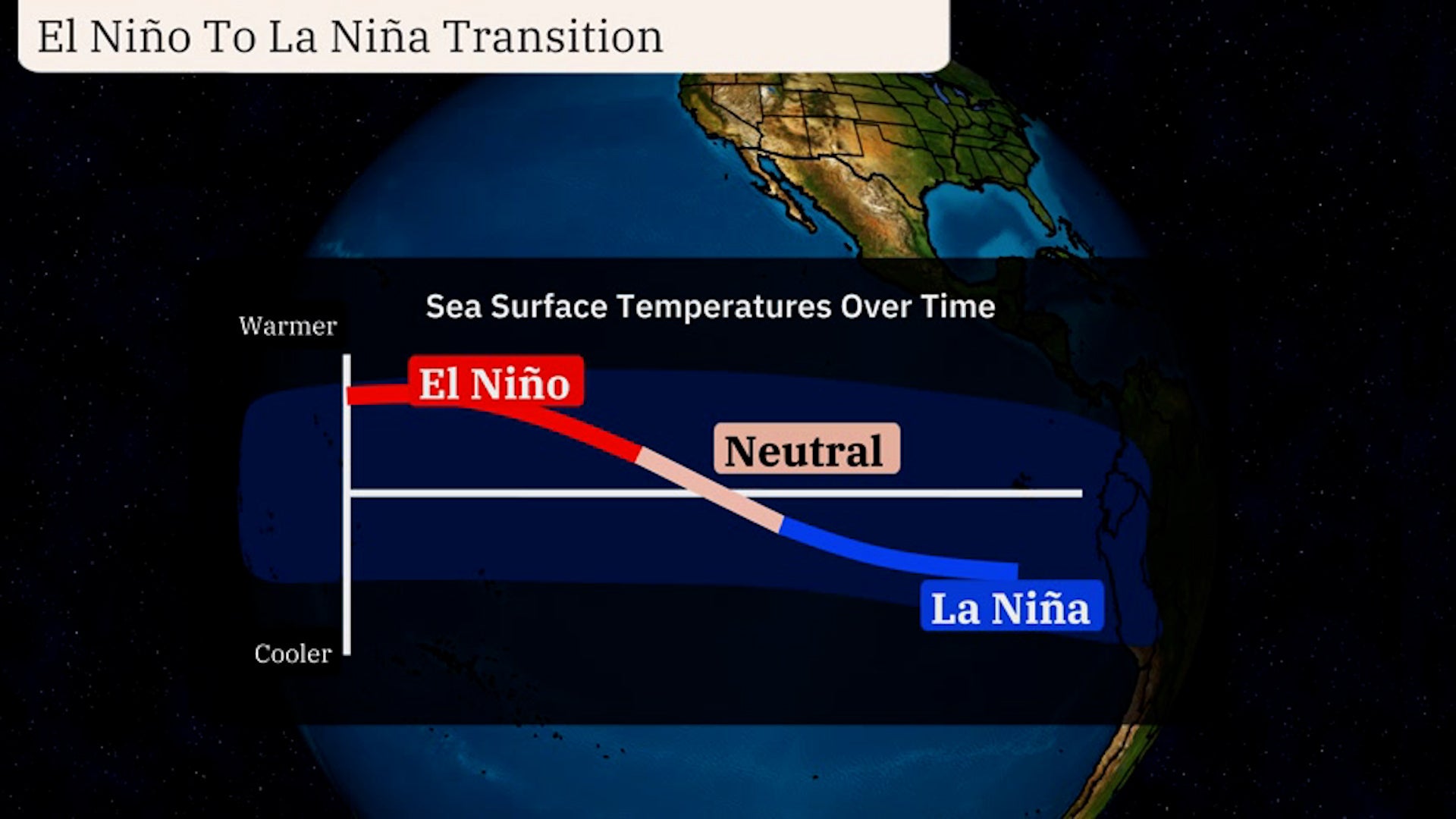
NOAA's Climate Prediction Center issued an El Niño Watch yesterday, saying "that conditions are favorable for a transition from neutral to El Niño conditions during June - August 2009". The pattern of changes in surface winds, upper-level winds, sea surface temperatures, and deeper water heat content are all consistent with what has been observed during previous developing El Niños. As I discussed in detail in last Friday's post, most of our more advanced El Niño computer models are predicting a weak El Niño event for the coming Atlantic hurricane season. If this indeed occurs, it is likely that Atlantic hurricane activity will be suppressed due to the strong upper-level winds an El Niño usually brings to the tropical Atlantic, creating high wind shear that tears hurricanes apart.

Figure 1. Departure from average of the heat content of the upper 300 meters of the ocean in the Equatorial Eastern Pacific. Much of this increase in heat content is due to a large area of waters 2 - 4°C warmer than average at the thermocline (a depth of 50 - 150 meters). The heat content of the ocean has been steadily increasing since January, consistent with a developing El Niño episode. Image credit: NOAA's Climate Prediciton Center.
Western Caribbean development possible next week
An area of disturbed weather has developed over Central America and the adjacent waters of the Eastern Pacific and Western Caribbean, associated with a tropical wave interacting with the Intertropical Convergence Zone (ITCZ) in the Eastern Pacific. This disturbance has generated 1 - 2 inches of rain over Costa Rica and western Panama over the past day, and is likely to bring 4 - 6 more inches of rain to those areas and Nicaragua over the next 3 - 4 days, as the storm drifts northwards into the Western Caribbean. The subtropical jet stream, which is currently bringing high wind shear to the Caribbean, is expected to shift northwards next week, bringing low wind shear to the region. The last few runs of several of our major dynamical computer weather forecast models have been pointing to the possible development of a tropical depression southwest of Jamaica by Thursday of next week. Heavy rains from the disturbance should spread into Jamaica and Cuba by Thursday and Friday, and may affect the Bahamas, Haiti, and South Florida 7 - 8 days from now.

Figure 2. Visible satellite image of the Central American disturbance expected to cross over into the Western Caribbean next week.
I'll have an update this weekend, probably on Sunday.
Jeff Masters
Reader Comments
Page: 1 | 2 | 3 | 4 | 5 | 6 | 7 | 8 | 9 | 10 | 11 | 12 | 13 | 14 | 15 | 16 | 17 | 18 | 19 | 20 | 21 | 22 | 23 | 24 | 25 | 26 | 27 | 28 | 29 | 30 | 31 | 32 | 33 | 34 | 35 | 36 | 37 | 38 | 39 | 40 | 41 | 42 | 43 | 44 — Blog Index
lol
String theory
Which is what I mentioned earlier in the week.
Satellite imagery shows a broad cyclonic rotation just north of Panama near an Upper high.
lol
Have to wonder though why the aggressive CMC is not latching on to development down there.A monsoon type flare up occuring in the extreme SW Caribbean.
Exactly....said the same a ways back...but, we will know more late tomorrow...
Everyone have a good day....and NO FIGHTING with ORCA........LOL!
V isibleSatellite Loop
Did you run the CMC's shear loop? It does not believe the subtropical jet will lift northward and keeps sharp positively titled upper troughing in the area.
For one here's QuikSCAT
If it moves N or NW away from ITCZ, could be our system. Timing fits with the 72hr surface forecast.
I'm a little more bullish on it now.
Will be interesting to watch how the factors evolve over the next three days.
Link
That surface map says Friday today is Saturday June 6th 2009
12Z Friday June 5 - look at the time stamp
Look again.
Look again.
okay I see it now. Looks like we got a surface low.
I agree.
LOL...that is true.
Looks like an invest coming....
Anyone seen Pat? I would like to hear his thoughts on this.
but will it develop
I've already said yes....if I'm wrong I get crow.
Hurricane Wilma of 2005 was the most intense.
El Nino years - 2006, 2004, 2002, 1997, 1991-1994, 1987, 1982
Othwerwise
Andrew 1992
456, would greatly appreciate if you post with the time/date data on these since it's not on the frame.
Takes time to look that up to get the context of the post... is it 72hrs, etc. ;)
TIA.
Viewing: 901 - 951
Page: 1 | 2 | 3 | 4 | 5 | 6 | 7 | 8 | 9 | 10 | 11 | 12 | 13 | 14 | 15 | 16 | 17 | 18 | 19 | 20 | 21 | 22 | 23 | 24 | 25 | 26 | 27 | 28 | 29 | 30 | 31 | 32 | 33 | 34 | 35 | 36 | 37 | 38 | 39 | 40 | 41 | 42 | 43 | 44 — Blog Index