Dr. Jeff Masters' WunderBlog

Did Hurricane Wilma have 209 mph sustained winds?
Posted by: Dr. Jeff Masters, 13:00 GMT le 28 avril 2012 +51
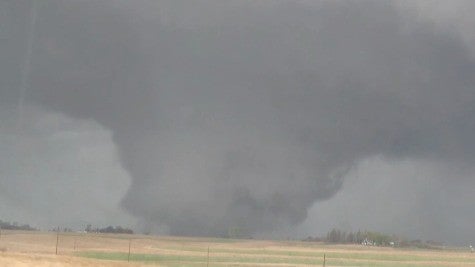
At last week's 30th Conference on Hurricanes and Tropical Meteorology of the American Meteorological Society, Dr. Eric Uhlhorn of NOAA's Hurricane Research Division presented a poster that looked at the relationship between surface winds measured by the SFMR instrument and flight-level winds in two Category 5 storms. Hurricane Hunter flights done into Category 5 Supertyphoon Megi (17 October 2010) and Category 5 Hurricane Felix (03 September 2007) found that the surface winds measured by SFMR were greater than those measured at flight level (10,000 feet.) Usually, surface winds in a hurricane are 10 - 15% less than at 10,000 feet, but he showed that in super-intense Category 5 storms with small eyes, the dynamics of these situations may generate surface winds that are as strong or stronger than those found at 10,000 feet. He extrapolated this statistical relationship (using the inertial stability measured at flight level) to Hurricane Wilma of 2005, which was the strongest hurricane on record (882 mb), but was not observed by the SFMR. He estimated that the maximum wind averaged around the eyewall in Wilma at peak intensity could have been 209 mph, plus or minus 20 mph--so conceivably as high as 229 mph, with gusts to 270 mph. Yowza. That's well in excess of the 200 mph minimum wind speed a top end EF-5 tornado has. The Joplin, Missouri EF-5 tornado of May 22, 2011 had winds estimated at 225 - 250 mph. That tornado ripped pavement from the ground, leveled buildings to the concrete slabs they were built on, and killed 161 people. It's not a pretty thought to consider what Wilma would have done to Cancun, Key West, or Fort Myers had the hurricane hit with sustained winds of what the Joplin tornado had.


Figure 1. Hurricane Wilma's pinhole eye as seen at 8:22 a.m. CDT Wednesday, Oct. 19, 2005, by the crew aboard NASA's international space station as the complex flew 222 miles above the storm. At the time, Wilma was the strongest Atlantic hurricane in history, with a central pressure of 882 mb and sustained surface winds estimated at 185 mph. The storm was located in the Caribbean Sea, 340 miles southeast of Cozumel, Mexico. Image source: NASA's Space Photo Gallery.


Figure 2. Damage in Joplin, Missouri after the EF-5 tornado of May 22, 2011. Image credit: wunderphotographer thebige.

Official all-time strongest winds in an Atlantic hurricane: 190 mph
The official record for strongest winds in an Atlantic hurricane is 190 mph, for Hurricane Allen of 1980 as it was entering the Gulf of Mexico, and for Hurricane Camille of 1969, as it was making landfall in Pass Christian, Mississippi. In Dr. Bob Sheets' and Jack Williams' book, Hurricane Watch, they recount the Hurricane Hunters flight into Camile as the hurricane reached peak intensity: On Sunday afternoon, August 17, and Air Force C-130 piloted by Marvin Little penetrated Camille's eye and measured a pressure of 26.62 inches of mercury. "Just as we were nearing the eyewall cloud we suddenly broke into a clear area and could see the sea surface below," the copilot, Robert Lee Clark, wrote in 1982. "What a sight! Although everyone on the crew was experienced except me, no one had seen the wind whip the sea like that before...Instead of the green and white splotches normally found in a storm, the sea surface was in deep furrows running along the wind direction....The velocity was beyond the descriptions used in our training and far beyond anything we had ever seen." So, the 190 mph winds of Camille were an estimate that was off the scale from anything that had ever been observed in the past. The books that the Hurricane Hunters carried, filled with photos of the sea state at various wind speeds, only goes up to 150 mph (Figure 2). I still used this book to estimate surface winds when I flew with the Hurricane Hunters in the late 1980s, and the books are still carried on the planes today. In the two Category 5 hurricanes I flew into, Hugo and Gilbert, I never observed the furrowing effect referred to above. Gilbert had surface winds estimated at 175 mph based on what we measured at flight level, so I believe the 190 mph wind estimate in Camille may be reasonable.


Figure 3. Appearance of the sea surface in winds of 130 knots (150 mph). Image credit: Wind Estimations from Aerial Observations of Sea Conditions (1954), by Charlie Neumann.


Figure 4. Radar image of Hurricane Camille taken at 22:15 UTC August 17, 1969, a few hours before landfall in Mississippi. At the time, Camille had the highest sustained winds of any Atlantic hurricane in history--190 mph.

The infamous hurricane hunter flight into Wilma during its rapid intensification
While I was at last week's conference, I had a conversation with Rich Henning, a flight meteorologist for NOAA's Hurricane Hunters, who served for many years as a Air Reconnaissance Weather Officer (ARWO) for the Air Force Hurricane Hunters. Rich told me the story of the Air Force Hurricane Hunter mission into Hurricane Wilma in the early morning hours of October 19, 2005, as Wilma entered its explosive deepening phase. The previous airplane, which had departed Category 1 Wilma six hours previously, flew through Wilma at an altitude of 5,000 feet. They measured a central pressure of 954 mb when they departed the eye at 23:10 UTC. The crew of the new plane assumed that the hurricane, though intensifying, was probably not a major hurricane, and decided that they would also go in at 5,000 feet. Winds outside the eyewall were less than hurricane force, so this seemed like a reasonable assumption. Once the airplane hit the eyewall, they realized their mistake. Flight level winds quickly rose to 186 mph, far in excess of Category 5 strength, and severe turbulence rocked the aircraft. The aircraft was keeping a constant pressure altitude to maintain their height above the ocean during the penetration, but the area of low pressure at Wilma's center was so intense that the airplane descended at over 1,000 feet per minute during the penetration in order to maintain a constant pressure altitude. By they time they punched into the incredibly tiny 4-mile wide eye, which had a central pressure of just 901 mb at 04:32 UTC, the plane was at a dangerously low altitude of 1,500 feet--not a good idea in a Category 5 hurricane. The pilot ordered an immediate climb, and the plane exited the other side of Wilma's eyewall at an altitude of 10,000 feet. They maintained this altitude for the remainder of the flight. During their next pass through the eye at 06:11 UTC, the diameter of the eye had shrunk to an incredibly tiny two miles--the smallest hurricane eye ever measured. During their third and final pass through the eye at 0801 UTC, a dropsonde found a central pressure of 882 mb--the lowest pressure ever observed in an Atlantic hurricane. In the span of just 24 hours, Wilma had intensified from a 70 mph tropical storm to a 175 mph category 5 hurricane--an unprecedented event for an Atlantic hurricane. Since the pressure was still falling, it is likely that Wilma became even stronger after the mission departed.

I'll have a new post by Tuesday at the latest.

Jeff Masters
Categories: Hurricane
  Permalink | A A A
Reader Comments
Display: 0, 50, 100, 200 Sort: Newest First - Order Posted
Viewing: 851 - 901

Page: 1 | 2 | 3 | 4 | 5 | 6 | 7 | 8 | 9 | 10 | 11 | 12 | 13 | 14 | 15 | 16 | 17 | 18 | 19 | 20 | 21 | 22 | 23 | 24 | 25 | 26 | 27 | 28 | 29 | 30 | 31 | 32 | 33 | 34 | 35 | 36 | 37 | 38 | 39Blog Index

851. weatherh98 16:33 GMT le 29 avril 2012    

\


It wanted to but no cigar
Member Since: 17 juin 2011 Posts: 11 Comments: 6095
852. BahaHurican 16:35 GMT le 29 avril 2012    
Somebody was showing the huge low replacing / displacing the AB high later this week; it looks like that's the same system that's moving through the midwest right now.

Member Since: 25 octobre 2005 Posts: 19 Comments: 17682
853. Tazmanian 16:35 GMT le 29 avril 2012    
Quoting Hurricanes101:
ok so I ask again, is there a new link to the atcf database? I think I found it, but the database does not have 91L updates on there from earlier this month


nop


this the same old one we been uesing for a long time


some time the atcf dont even update if the storm is too weak or some in
Member Since: 21 mai 2006 Posts: 5088 Comments: 111360
854. nigel20 16:35 GMT le 29 avril 2012    
Quoting WxGeekVA:


The low is exactly where it looks like it is...

Agreed
Member Since: 6 novembre 2010 Posts: 2 Comments: 4556
855. LargoFl 16:35 GMT le 29 avril 2012    
Quoting MAweatherboy1:

It looks like a ton of rain for south Florida and the Bahamas but this has no chance to develop... Way too much shear... Still pretty impressive for this time of year though
watching this one closely, we all see that spin,forget the month it is in, water temps are in the mid 70's,if i lived in texas-louisanna i would not take my eyes off of it
Member Since: 6 août 2011 Posts: 0 Comments: 22426
856. GeorgiaStormz 16:37 GMT le 29 avril 2012    
Playing with 90F for the next couple days in North and Central GA.
It is too early for such heat.
Member Since: 11 février 2012 Posts: 0 Comments: 7172
857. weatherh98 16:38 GMT le 29 avril 2012    
Quoting NCHurricane2009:


Actually there is a spot of 20 kts of shear (near W Cuba) in that map right where this surface trough is forming. And the shear has been dropping....so I am cautious right now...


Yes you are correct check out the shear tendency on this,...


-5 and -10 in 24 hours.
Member Since: 17 juin 2011 Posts: 11 Comments: 6095
858. nrtiwlnvragn 16:38 GMT le 29 avril 2012    
Quoting Tazmanian:


nop


this the same old one we been uesing for a long time


some time the atcf dont even update if the storm is too weak or some in


Taz there are multiple servers for ATCF.
Link

One that is currently not updating Link
Member Since: 23 septembre 2005 Posts: 11 Comments: 8943
859. weatherh98 16:39 GMT le 29 avril 2012    
Quoting BahaHurican:
Somebody was showing the huge low replacing / displacing the AB high later this week; it looks like that's the same system that's moving through the midwest right now.


That was me
Member Since: 17 juin 2011 Posts: 11 Comments: 6095
861. LargoFl 16:40 GMT le 29 avril 2012    
low pressure is developing down south ............HAZARDOUS WEATHER OUTLOOK
NATIONAL WEATHER SERVICE TAMPA BAY RUSKIN FL
445 AM EDT SUN APR 29 2012

FLZ039-042-043-048>052-055>057-060>062-065-GMZ830 -850-853-856-870-
873-876-300845-
LEVY-CITRUS-SUMTER-HERNANDO-PASCO-PINELLAS-HILLSB OROUGH-POLK-
MANATEE-HARDEE-HIGHLANDS-SARASOTA-DE SOTO-CHARLOTTE-LEE-
TAMPA BAY WATERS-TARPON SPRINGS TO SUWANNEE RIVER OUT 20 NM-
ENGLEWOOD TO TARPON SPRINGS OUT 20 NM-
BONITA BEACH TO ENGLEWOOD OUT 20 NM-
TARPON SPRINGS TO SUWANNEE RIVER OUT 20 TO 60 NM-
ENGLEWOOD TO TARPON SPRINGS OUT 20 TO 60 NM-
BONITA BEACH TO ENGLEWOOD OUT 20 TO 60 NM-
445 AM EDT SUN APR 29 2012

THIS HAZARDOUS WEATHER OUTLOOK IS FOR WEST CENTRAL AND SOUTHWEST
FLORIDA.

.DAY ONE...TODAY AND TONIGHT.

...THUNDERSTORM IMPACT...
ISOLATED THUNDERSTORMS WILL BE POSSIBLE TODAY ACROSS THE AREA IN
LOCATIONS SOUTH OF TAMPA BAY. SEVERE WEATHER IS NOT EXPECTED AND
THE PRIMARY THREATS WILL BE CLOUD TO GROUND LIGHTNING AND HEAVY
DOWNPOURS.

...WIND AND SEA IMPACT...
WINDS WILL INCREASE THIS EVENING AS LOW PRESSURE DEVELOPS TO THE
SOUTH. A SMALL CRAFT ADVISORY IS IN EFFECT FOR THE SOUTHERN WATERS
OF THE GULF OF MEXICO BEGINNING LATE THIS EVENING.

.DAYS TWO THROUGH SEVEN...MONDAY THROUGH SATURDAY.

...THUNDERSTORM IMPACT...
THERE WILL BE A CHANCE OF THUNDERSTORMS EACH DAY THROUGH THE
COMING WEEK. SEVERE WEATHER IS NOT EXPECTED...AND THE PRIMARY
THREAT WILL BE CLOUD TO GROUND LIGHTNING.

...WIND AND SEA IMPACT...
A SMALL CRAFT ADVISORY IS IN EFFECT FOF THE SOUTHERN WATERS OF THE
GULF OF MEXICO THROUGH EARLY TUESDAY MORNING. ELEVATED WINDS AND
SEAS WILL CONTINUE THROUGH THE COMING WEEK AS CONDITIONS REMAIN NEAR
SMALL CRAFT ADVISORY LEVELS THROUGH WEDNESDAY.

.SPOTTER INFORMATION STATEMENT...

SPOTTER ACTIVATION WILL NOT BE NEEDED TODAY.

$$

JOHNSON
Member Since: 6 août 2011 Posts: 0 Comments: 22426
862. BahaHurican 16:40 GMT le 29 avril 2012    
Quoting MAweatherboy1:

It looks like a ton of rain for south Florida and the Bahamas but this has no chance to develop... Way too much shear... Still pretty impressive for this time of year though
NHC propogates it into the central GOM as a shortwave trough.
Member Since: 25 octobre 2005 Posts: 19 Comments: 17682
863. Skeptic33 16:40 GMT le 29 avril 2012    


Talk about the ultimate cherry picking...

No, the world isn't ending because of ice-free Arctic Ocean caused by CO2...

That's a FACT.
Member Since: 8 Mars 2011 Posts: 0 Comments: 89
864. WxGeekVA 16:40 GMT le 29 avril 2012    
Here's my simplified analysis of the Florida system:

Member Since: 3 septembre 2011 Posts: 13 Comments: 3323
865. chrisdscane 16:41 GMT le 29 avril 2012    
Quoting weatherh98:


Yall are correct, there is a low level circulation starting


would hate to see the NHC drop the ball on another pre-season storm dont be surprise to see something about this feature at 2
Member Since: 21 juillet 2010 Posts: 0 Comments: 738
866. weatherh98 16:41 GMT le 29 avril 2012    
Do we know if this has an anticyclone? the shear is lower over the coc.
Member Since: 17 juin 2011 Posts: 11 Comments: 6095
867. Grothar 16:42 GMT le 29 avril 2012    
Notice the shear tendency below Florida.


Member Since: 17 juillet 2009 Posts: 57 Comments: 19554
869. chrisdscane 16:43 GMT le 29 avril 2012    
look at post 857 if u r concerned about shear it tells the story
Member Since: 21 juillet 2010 Posts: 0 Comments: 738
871. LargoFl 16:44 GMT le 29 avril 2012    
Member Since: 6 août 2011 Posts: 0 Comments: 22426
872. GeorgiaStormz 16:44 GMT le 29 avril 2012    
yall could write a book of analysis on every little low, right?

This looks no different than a noreaster to me, excpet it is all rain.
It will turn to nothing soon enough. :)
Member Since: 11 février 2012 Posts: 0 Comments: 7172
873. weatherh98 16:44 GMT le 29 avril 2012    
Quoting chrisdscane:


would hate to see the NHC drop the ball on another pre-season storm dont be surprise to see something about this feature at 2


actually i would because this thing is barely cranking up. maybe by 8 at the earliest
Member Since: 17 juin 2011 Posts: 11 Comments: 6095
874. MAweatherboy1 16:44 GMT le 29 avril 2012    
Quoting EugeneTillman:


Was interesting yesterday when I ran the SPC severe outlook through the week. It pegged Chicago on Day 4 but then pulled back. Now, they want to paint the upper Plains (west of Des Moines, IA) in the bullseye. At least in the bullseye for a slight risk with a 15% hatched area. However, I would not be surprised if that even gets a bump up that day. It's quite a large area of severe weather they are painting for Day 3:


Day 3 actually has a 30% hatched, not 15
Member Since: 11 février 2012 Posts: 67 Comments: 6379
875. BahaHurican 16:45 GMT le 29 avril 2012    
Quoting LargoFl:
watching this one closely, we all see that spin,forget the month it is in, water temps are in the mid 70's,if i lived in texas-louisanna i would not take my eyes off of it
Even if it does spin up, I doubt it'll be more than a rainmaker wherever it ends up. I know a couple places round the GOM that could use the rain.
Member Since: 25 octobre 2005 Posts: 19 Comments: 17682
876. CybrTeddy 16:45 GMT le 29 avril 2012    
Quoting EugeneTillman:
CybrTed ~

Did some research and some animated loops on Camille yesterday and man, you were right. She really was a beast all the way up till landfall. Nothing really stopped her after she peaked with those incredible 190mph winds...


It must have been a truly terrifying experience to be in Camille during landfall. 190mph winds is insane to be in.
Member Since: 8 juillet 2005 Posts: 253 Comments: 20280
877. WxGeekVA 16:46 GMT le 29 avril 2012    
Quoting EugeneTillman:


I like that. Like that alot. Hope you plan to do some of that analysis during cane season...


Oh, I do plan to. And guess what I made that with? MS Paint!
Member Since: 3 septembre 2011 Posts: 13 Comments: 3323
878. weatherh98 16:46 GMT le 29 avril 2012    


Lower convergence...
Member Since: 17 juin 2011 Posts: 11 Comments: 6095
879. TropicTraveler 16:46 GMT le 29 avril 2012    
Hello everyone. I'm checking in from the Celebrity Eclipse in a position about 900 miles west of Spain. We had one of our stops deleted (Ireland) in favor of Spain because of a storm in the Bay of Biscay with 26 foot waves and 60 mph winds. Works o.k. for me. Instead we go to La Coruna which looks interesting. Then I expect we will still have some weather getting to France and eventually England. Miss the back and forth of the blog but on ships they charge for internet. Imagine that! Dang. Signing off.. Hope there is good weather there!
Member Since: 24 juillet 2007 Posts: 2 Comments: 896
880. weatherh98 16:47 GMT le 29 avril 2012    
Quoting GeorgiaStormz:
yall could write a book of analysis on every little low, right?

This looks no different than a noreaster to me, excpet it is all rain.
It will turn to nothing soon enough. :)


Most likely
Member Since: 17 juin 2011 Posts: 11 Comments: 6095
882. nigel20 16:48 GMT le 29 avril 2012    
Quoting WxGeekVA:
Here's my simplified analysis of the Florida system:


nice and simple
Member Since: 6 novembre 2010 Posts: 2 Comments: 4556
884. AussieStorm 16:48 GMT le 29 avril 2012    
Quoting nrtiwlnvragn:
GHCC visible loop over South Florida.

Is there a COC forming?
Member Since: 30 septembre 2007 Posts: 5 Comments: 13366
885. LargoFl 16:49 GMT le 29 avril 2012    
1952 – Feb. 2 –5. Tropical Storm 1 crosses southern Florida. 1952 Unisys archive.
Member Since: 6 août 2011 Posts: 0 Comments: 22426
886. weatherh98 16:51 GMT le 29 avril 2012    
Quoting AussieStorm:

Is there a COC forming?


yeaup
Member Since: 17 juin 2011 Posts: 11 Comments: 6095
887. WxGeekVA 16:51 GMT le 29 avril 2012    
Quoting CybrTeddy:


It must have been a truly terrifying experience to be in Camille during landfall. 190mph winds is insane to be in.


Found this interesting comparison image of Camille and Katrina:


Coincidentally similar-looking.....
Member Since: 3 septembre 2011 Posts: 13 Comments: 3323
888. nrtiwlnvragn 16:51 GMT le 29 avril 2012    
Quoting AussieStorm:

Is there a COC forming?


Appears midlevel to me. Four hour Key West Radar Loop
Member Since: 23 septembre 2005 Posts: 11 Comments: 8943
889. Grothar 16:52 GMT le 29 avril 2012    
Quoting EugeneTillman:


I agree, but wasn't Camille on the smaller size. Not taking anything away from her by ANY means!! She wasn't quite Charlie or Andrew small, but smaller than Wilma. I think that also must play a role into these things.

I always look at Alex as a prime example. 948mb but a cat 2.

At first I was reluctant to think she couldn't be anything over 200 sustained, but now after reading all the commentary and looking into it more, I think that it can be a real possibility...


Member Since: 17 juillet 2009 Posts: 57 Comments: 19554
891. Thrawst 16:54 GMT le 29 avril 2012    
Quoting Grothar:


Isn't it hard running in the sand?


You know what I mean -_-
up to 2.4 inches now. Winds have dramatically increased to near 20 mph now.
Member Since: 18 juillet 2010 Posts: 49 Comments: 1066
892. WxGeekVA 16:54 GMT le 29 avril 2012    
Member Since: 3 septembre 2011 Posts: 13 Comments: 3323
893. weatherh98 16:55 GMT le 29 avril 2012    


warm enough for a sts
Member Since: 17 juin 2011 Posts: 11 Comments: 6095
895. LargoFl 16:56 GMT le 29 avril 2012    
Tropical Storm Ana was the only tropical cyclone on record in the North Atlantic basin to form during the month of April. The first tropical cyclone of the season, it developed as a subtropical cyclone from a non-tropical low on April 20 to the west of Bermuda. It tracked east-southeastward and organized, and on April 21 it transitioned into a tropical cyclone with peak winds of 60 mph (95 km/h). Tropical Storm Ana turned east-northeastward, steadily weakening due to wind shear and an approaching cold front, and on April 24 it became an extratropical cyclone. The storm brushed Bermuda with light rain, and the remnants produced precipitation in the Azores and the United Kingdom. Swells generated by the storm capsized a boat along the Florida coastline, causing two fatalities.
Member Since: 6 août 2011 Posts: 0 Comments: 22426
896. AussieStorm 16:56 GMT le 29 avril 2012    
Quoting nrtiwlnvragn:


Appears midlevel to me. Four hour Key West Radar Loop

seems to be from right to left with the coc at the end just north of the radar location
Member Since: 30 septembre 2007 Posts: 5 Comments: 13366
897. KEEPEROFTHEGATE (Mod) 16:57 GMT le 29 avril 2012    
XX/AOI/XL
MARK
XXN/XXW
Member Since: 15 juillet 2006 Posts: 144 Comments: 40655
898. HurricaneDean07 16:58 GMT le 29 avril 2012    
Quoting weatherh98:


Lower convergence...

Well there's something I can talk about :P
Good Afternoon everyone. Interesting trough of low pressure in the Bahamas, could see NHC mentioning it later on in the day. Though I don't believe that it will be our Alberto. I give it a 30% chance of becoming our first storm...
Member Since: 3 octobre 2010 Posts: 39 Comments: 4054
899. TropicalAnalystwx13 16:58 GMT le 29 avril 2012    
Member Since: 6 juillet 2010 Posts: 89 Comments: 25353
900. Grothar 16:59 GMT le 29 avril 2012    
The wind fields comparing Camille and Katrina. Katrina's windfield was almost twice that of Camille, but the intensity of Camille was greater in a smaller area.

Member Since: 17 juillet 2009 Posts: 57 Comments: 19554
901. WxGeekVA 17:00 GMT le 29 avril 2012    
This storm has perfect convergence and divergence...


And the shear is only ~20kts


850 vort looks good as well...

Member Since: 3 septembre 2011 Posts: 13 Comments: 3323

Viewing: 851 - 901

Page: 1 | 2 | 3 | 4 | 5 | 6 | 7 | 8 | 9 | 10 | 11 | 12 | 13 | 14 | 15 | 16 | 17 | 18 | 19 | 20 | 21 | 22 | 23 | 24 | 25 | 26 | 27 | 28 | 29 | 30 | 31 | 32 | 33 | 34 | 35 | 36 | 37 | 38 | 39Blog Index

New Comment
Community Standards Policy Comments will take a few seconds to appear.
Post Your Comments
Please sign in to post comments.
Not only will you be able to leave comments on this blog, but you'll also have the ability to upload and share your photos in our Wunder Photos section.
About JeffMasters
Jeff co-founded the Weather Underground in 1995 while working on his Ph.D. He flew with the NOAA Hurricane Hunters from 1986-1990.

Local Weather
Clear
62 ° F
Ciel dégagé
Community Activity