Dr. Jeff Masters' WunderBlog

The 2012 Atlantic hurricane season begins: what is in store?
Posted by: Dr. Jeff Masters, 14:56 GMT le 01 juin 2012 +51
The 2012 Atlantic hurricane season is officially underway. With two early season storms, Alberto and Beryl, having already come and gone, this year's season has gotten off to a near-record early start. Since reliable record keeping began in 1851, only the hurricane seasons of 1908 and 1887 had two named storms form so early in the year. So, will this early pace continue? What will this year's hurricane season bring? Here are my top five questions for the coming season:

1) All of the major seasonal hurricane forecasts are calling for a near-average season, with 10 - 13 named storms. Will these pre-season predictions pan out?

2) How will the steering current pattern evolve? Will the U.S. break its six-year run without a major hurricane landfall, the longest such streak since 1861 - 1868?

3) Will the 420,000 people still homeless in Haiti in the wake of the January 2010 earthquake dodge a major tropical cyclone flooding disaster for the third consecutive hurricane season?

4) How will new National Hurricane Center director Rick Knabb fare in his inaugural season?

5) Will the Republican National Convention, scheduled to occur in Tampa during the last week of August, get interrupted by a tropical storm or hurricane?


Figure 1. True-color MODIS satellite image of Beryl taken at 2:35 pm EDT May 27, 2012 by NASA's Aqua satellite. At the time, Beryl was a tropical storm with winds of 65 mph.

Quick summary of the early-season atmosphere/ocean conditions in the Atlantic
Strong upper-level winds tend to create a shearing force on tropical storms (wind shear), which tears them apart before they can get going. In June, two branches of the jet stream, the polar jet to the north, and a subtropical jet to the south, typically bring high levels of wind shear to the Atlantic. The southern subtropical jet currently lies over the Caribbean, and is expected to remain there the next two weeks, making development unlikely in the Caribbean. Between the subtropical jet to the south and the polar jet to the north, a "hole" in the wind shear pattern formed during May off the Southeast U.S. coast, and this is where both Alberto and Beryl were able to form. Their formation was aided by the fact ocean temperatures off the U.S. East coast are quite warm--about 1 - 2°C above average. A wind shear "hole" is predicted to periodically open up during the next two weeks off the Southeast U.S. coast, making that region the most likely area of formation for any first-half-of-June tropical storms. However, none of the reliable computer models are predicting tropical storm formation in the Atlantic between now and June 8.

May ocean temperatures in the tropical Atlantic are approximately the third coolest we've seen since the current active hurricane period began in 1995. SSTs in the Main Development Region (MDR), between 10 - 20°N latitude, from the coast of Africa to the Central America, were about 0.35°C above average in May, according to NOAA's Coral Reef Watch. Tropical storm activity in the Atlantic is strongly dependent on ocean temperatures in this region, and the relatively cool temperatures imply that we should see a delayed start to development of tropical waves coming off the coast of Africa and moving into the Caribbean, compared to the period 1995 - 2011. An interesting feature of this month's SST departure from average image (Figure 2) is the large area of record-warm ocean temperatures off the mid-Atlantic and New England coasts, from North Carolina to Massachusetts. Ocean temperatures are 3 - 5°C (5 - 9°F) above average in this region. This makes waters of much above-average warmth likely to be present during the peak part of hurricane season, increasing the chances for a strong hurricane to affect the mid-Atlantic and New England coast.

The upper-level jet stream pattern is critical for determining where any tropical storms and hurricanes that form might go. Presently, these "steering currents" are in a typical configuration for June, favoring a northward or northeastward motion for any storms that might form. However, steering current patterns are fickle and difficult to predict more that seven days in advance, and there is no telling how the steering current pattern might evolve this hurricane season. We might see a pattern like evolved during 2004 - 2005, with a westward-extending Bermuda High, forcing storms into Florida and the Gulf Coast. Or, we might see a pattern like occurred during 2010 - 2011, with the large majority of the storms recurving harmlessly out to sea. That's about as helpful as a weather forecast of "Sho' enough looks like rain, lessen' of course it clears up," I realize.


Figure 2. Departure of sea surface temperature from average for May 31, 2012. Image credit: NOAA/NESDIS.

Colorado State predicts a slightly above-average hurricane season
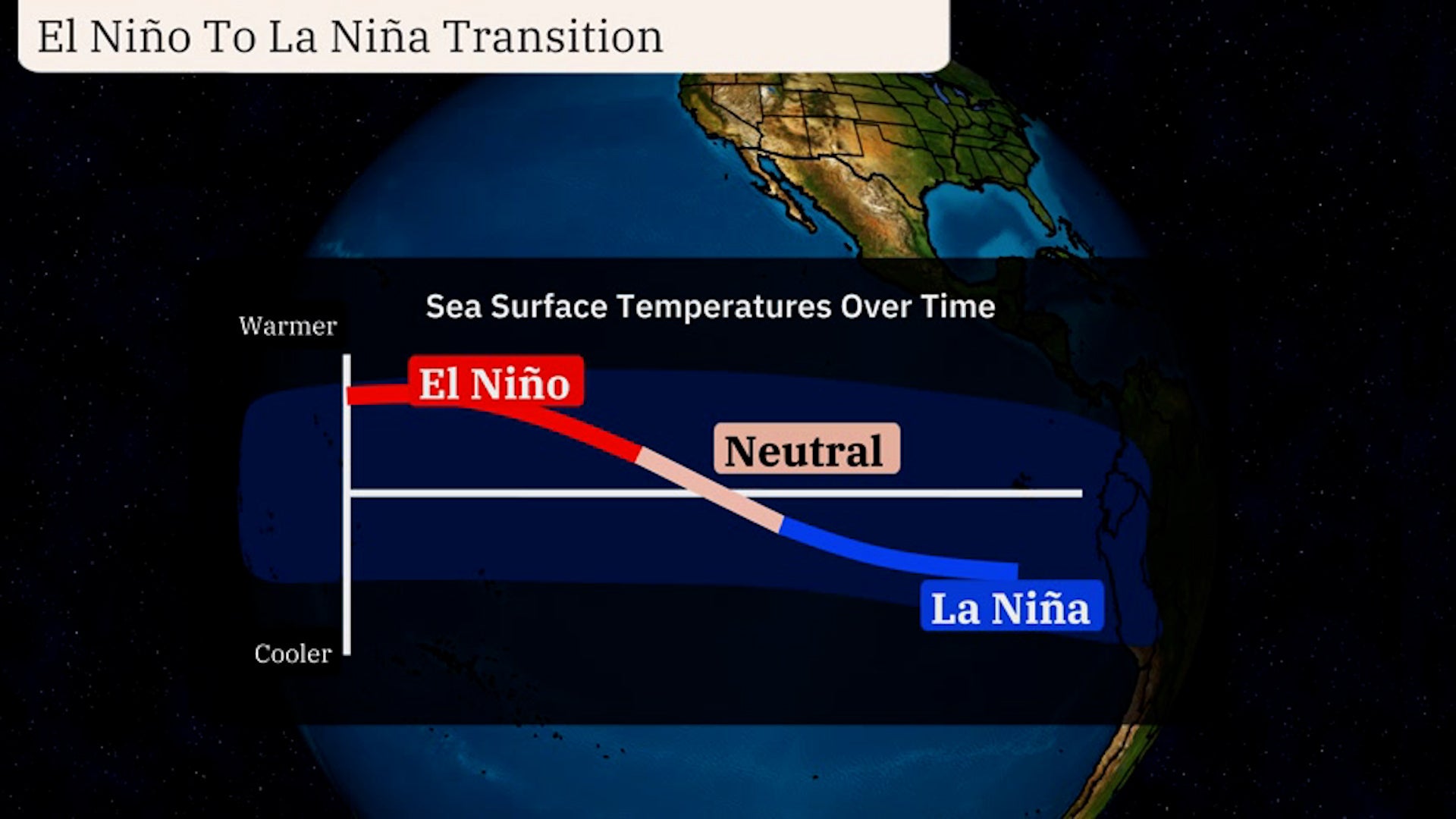
A slightly above-average Atlantic hurricane season is on tap for 2012, according to the seasonal hurricane forecast issued June 1 by Dr. Phil Klotzbach and Dr. Bill Gray of Colorado State University (CSU). The CSU team is calling for 13 named storms, 5 hurricanes, and 2 intense hurricanes, and an Accumulated Cyclone Energy (ACE) of 80, which is 87% of average. This is very close to the 1981 - 2010 average of 12 named storms, 6 hurricanes, and 3 major hurricanes. Hurricane seasons during the active hurricane period 1995 - 2011 have averaged 15 named storms, 8 hurricanes, and 4 major hurricanes, with an ACE index 153% of the median. The forecast calls for an average chance of a major hurricane hitting the U.S., both along the East Coast (28% chance, 31% chance is average) and the Gulf Coast (28% chance, 30% chance is average). The risk of a major hurricane in the Caribbean is also average, at 39% (42% is average.) The CSU teams expects we will have a weak El Niño develop by the peak of this year's hurricane season in September, which will cut down on this year's activity by increasing wind shear over the Tropical Atlantic. However, there is considerable uncertainty in this outlook.

Analogue years
The CSU team picked four previous years when atmospheric and oceanic conditions were similar to what we are seeing this year: neutral El Niño conditions in April - May and average tropical Atlantic and far North Atlantic SSTs during
April - May, followed by August - October periods that were generally characterized by weak El Niño conditions and average tropical Atlantic SSTs . Those four years were 2009, a quiet El Niño year with only 3 hurricanes; 2001, which featured two major Caribbean hurricanes, Iris and Michelle; 1968, a very quiet year with no hurricanes stronger than a Category 1; and 1953, a moderately busy year with 14 named storms, 6 hurricanes, and 4 intense hurricanes. The mean activity for these four years was 11.5 named storms, 6 hurricanes, and 2.5 intense hurricanes.

How accurate are the June forecasts?
The June forecasts by the CSU team between 1998 and 2009 had a skill 19% - 30% higher than a "no-skill" climatology forecast for number of named storms, number of hurricanes, and the ACE index (Figure 3). This is a decent amount of skill for a seasonal forecast, and these June forecasts can be useful to businesses such as the insurance industry and oil and gas industry that need to make bets on how active the coming hurricane season will be. Unfortunately, the CSU June 1 forecasts do poorly at forecasting the number of major hurricanes (only 3% skill), and major hurricanes cause 80% - 85% of all hurricane damage (normalized to current population and wealth levels.) This year's June forecast uses a brand new formula tried in 2011 for the first time, so there is no way to evaluate its performance. An Excel spreadsheet of their forecast skill (expressed as a mathematical correlation coefficient) show values from 0.41 to 0.62 for their June forecasts made between 1984 and 2010, which is respectable.


Figure 3. Comparison of the percent improvement over climatology for May and August seasonal hurricane forecasts for the Atlantic from NOAA, CSU and TSR from 1999-2009 (May) and 1998-2009 (August), using the Mean Squared Error. Image credit: Verification of 12 years of NOAA seasonal hurricane forecasts, National Hurricane Center.


Figure 4. Comparison of the percent improvement in mean square error over climatology for seasonal hurricane forecasts for the Atlantic from NOAA, CSU and TSR from 2002-2011, using the Mean Square Skill Score (MSSS). The figure shows the results using two different climatologies: a fixed 50-year (1950 - 1999) climatology, and a 2002 - 2011 climatology. Skill is poor for forecasts issued in December and April, moderate for June forecasts, and good for August forecasts. Image credit: Tropical Storm Risk, Inc.

TSR predicts a near-average hurricane season
The British private forecasting firm Tropical Storm Risk, Inc. (TSR) calls for 12.7 named storms, 5.7 hurricanes, 2.7 intense hurricanes, and an Accumulated Cyclone Energy (ACE) of 98, which is near average. TSR rates their skill level as 23 - 27% higher than a "no-skill" forecast made using climatology, though an independent assessment by the National Hurricane Center (Figure 3) gives them somewhat lower skill numbers, using a different metric than TSR uses. TSR predicts a 48% chance that U.S. landfalling activity will be above average, a 26% chance it will be near average, and a 26% chance it will be below average. TSR’s two predictors for their statistical model are the forecast July-September trade wind speed over the Caribbean and tropical North Atlantic, and the forecast August-September 2012 sea surface temperatures in the tropical North Atlantic.

TSR projects that 3.6 named storms will hit the U.S., with 1.6 of these being hurricanes. The averages from the 1950-2011 climatology are 3.1 named storms and 1.5 hurricanes. They rate their skill at making these June forecasts for U.S. landfalls at 7 - 11% higher than a "no-skill" forecast made using climatology. In the Lesser Antilles Islands of the Caribbean, TSR projects 1.2 named storms, 0.5 of these being hurricanes. Climatology is 1.1 named storms and 0.5 hurricanes.

FSU predicts a slightly above-average hurricane season: 13 named storms
The Florida State University (FSU) Center for Ocean-Atmospheric Prediction Studies (COAPS) issued their fourth annual Atlantic hurricane season forecast, calling for a 70% probability of 10 - 16 named storms and 5 - 9 hurricanes. The mid-point forecast is for 13 named storms, 7 hurricanes, and an accumulated cyclone energy (ACE) of 122. The scientists use a numerical atmospheric model developed at COAPS to understand seasonal predictability of hurricane activity. The model is one of only a handful of numerical models in the world being used to study seasonal hurricane activity and is different from the statistical methods used by other seasonal hurricane forecasters such as Colorado State, TSR, and PSU (NOAA uses a hybrid statistical-dynamical model technique.) The FSU forecast has been the best one over the past three years, for predicting numbers of Atlantic named storms and hurricanes:

2009 prediction: 8 named storms, 4 hurricanes. Actual: 9 named storms, 3 hurricanes
2010 prediction: 17 named storms, 10 hurricanes. Actual: 19 named storms, 12 hurricanes
2011 prediction: 17 named storms, 9 hurricanes. Actual: 19 named storms, 7 hurricanes

Penn State predicts a near-average hurricane season: 11 named storms
A statistical model by Penn State's Michael Mann and alumnus Michael Kozar is calling for an average Atlantic hurricane season with 11.2 named storms, plus or minus 3.3 storms. Their prediction was made using statistics of how past hurricane seasons have behaved in response to sea surface temperatures (SSTs), the El Niño/La Niña oscillation, the North Atlantic Oscillation (NAO), and other factors. The statistic model assumes that in 2012 the current 0.35°C above average temperatures in the MDR will persist throughout hurricane season, the El Niño phase will be neutral to slightly warm, and the North Atlantic Oscillation (NAO) will be near average.

The PSU team has been making Atlantic hurricane season forecasts since 2007, and these predictions have done pretty well:

2007 prediction: 15 named storms, Actual: 15
2009 prediction: 12.5, named storms, Actual: 9
2010 prediction: 23 named storms, Actual: 19
2011 prediction: 16 named storms, Actual: 19

UK Met Office predicts a slightly below-average hurricane season: 10 named storms
The UK Met Office uses a combination of their Glosea4 model and the ECMWF system 4 model to predict seasonal hurricane activity. These dynamical numerical models are predicting a slightly below-average season, with 10 named storms and an ACE index of 90.

NOAA predicts an average hurricane season: 12 named storms
As I discussed in detail in a May 24 blog post, NOAA is calling for 12 named storms, 6 hurricanes, 2 major hurricanes, and an ACE index 102% of normal.


NOAA predicts an average Eastern Pacific hurricane season
NOAA's pre-season prediction for the Eastern Pacific hurricane season, issued on May 24, calls for a near-average season, with 12 -18 named storms, 5 - 9 hurricanes, 2 - 5 major hurricanes, and an ACE index 70% - 130% of the median. The mid-point of these ranges gives us a forecast for 15 named storms, 7 hurricanes, and 3.5 major hurricanes, with an ACE index exactly average. The 1981 - 2010 averages for the Eastern Pacific hurricane season are 15 named storms, 8 hurricanes, and 4 major hurricanes. So far in 2012, there have been two named storms. On average, the 2nd storm of the year doesn't form until June 25. We had a record early appearance of the season's second named storm (Bud on May 21.) Bud was also the strongest Eastern Pacific hurricane on record for so early in the year. Records in the Eastern Pacific extend back to 1949.

Western Pacific typhoon season forecast not available yet
Dr. Johnny Chan of the City University of Hong Kong issues a seasonal forecast of typhoon season in the Western Pacific, but this forecast is not yet available (as of June 1.) An average typhoon season has 27 named storms and 17 typhoons. Typhoon seasons immediately following a La Niña year typically see higher levels of activity in the South China Sea, especially between months of May and July. Also, the jet stream tends to dip farther south than usual to the south of Japan, helping steer more tropical cyclones towards Japan and Korea. With the formation of Tropical Storm Mawar today east of the Philippines, the Western Pacific is exactly on the usual climatological pace for formation of the season's third storm.


Figure 5. Time series of the annual number of tropical storms and typhoons in the Northwest Pacific from 1960 - 2011. Red circles and blue squares indicate El Niño and La Niña years, respectively. Note that La Niña years tend to have lower activity, with 2010 having the lowest activity on record (15 named storms.) In 2011, there were 20 named storms. The thick horizontal line indicates the normal number of named storms (27.) Image credit: City University of Hong Kong.
Categories: Hurricane
  Permalink | A A A
Reader Comments
Display: 0, 50, 100, 200 Sort: Newest First - Order Posted
Viewing: 1351 - 1401

Page: 1 | 2 | 3 | 4 | 5 | 6 | 7 | 8 | 9 | 10 | 11 | 12 | 13 | 14 | 15 | 16 | 17 | 18 | 19 | 20 | 21 | 22 | 23 | 24 | 25 | 26 | 27 | 28 | 29 | 30 | 31 | 32 | 33 | 34 | 35 | 36 | 37 | 38Blog Index

1351. galvestonhurricane 05:07 GMT le 03 juin 2012    
Good night/morning everyone! I'm off to bed!
Member Since: 18 juin 2010 Posts: 0 Comments: 176
1352. alexhurricane1991 05:07 GMT le 03 juin 2012    
I have one when was the last time the city of savannah georgia was directly impacted by a major hurricane?
Member Since: 8 avril 2010 Posts: 15 Comments: 2543
1353. windshear1993 05:07 GMT le 03 juin 2012    
Quoting KoritheMan:


Tropical Storm Marco of 2008. My teardrops would give a larger satellite presentation.
whats the avverage number of storms and major hurricanes in the 1995-2010 range
Member Since: 1 juin 2012 Posts: 0 Comments: 66
1354. KoritheMan 05:07 GMT le 03 juin 2012    
Quoting galvestonhurricane:


Sorry, Kori - that is why you are the man!


No need to flaunt it. I know I'm sexy.
Member Since: 7 Mars 2007 Posts: 409 Comments: 15445
1355. KoritheMan 05:07 GMT le 03 juin 2012    
Quoting alexhurricane1991:
I have one when was the last time the city of savannah georgia was directly impacted by a major hurricane?


1893.
Member Since: 7 Mars 2007 Posts: 409 Comments: 15445
1356. KoritheMan 05:08 GMT le 03 juin 2012    
Quoting galvestonhurricane:
Good night/morning everyone! I'm off to bed!


Night.
Member Since: 7 Mars 2007 Posts: 409 Comments: 15445
1357. galvestonhurricane 05:08 GMT le 03 juin 2012    
Quoting CybrTeddy:
1303. Hurricane Ike (which is coincidentally the same name as the scale it was rated on)


Yeah, things got pretty confusing on this blog when Ike (the person) started talking about the IKE of hurricane Ike.
Member Since: 18 juin 2010 Posts: 0 Comments: 176
1358. alexhurricane1991 05:09 GMT le 03 juin 2012    
Quoting KoritheMan:


1893.
You are CORRECT!!!!!
Member Since: 8 avril 2010 Posts: 15 Comments: 2543
1359. KoritheMan 05:09 GMT le 03 juin 2012    
Quoting windshear1993:
whats the avverage number of storms and major hurricanes in the 1995-2010 range


14/8/4 I think, though I'm honestly not sure on this one. And doing the averaging myself would be cheating.
Member Since: 7 Mars 2007 Posts: 409 Comments: 15445
1360. nigel20 05:10 GMT le 03 juin 2012    
Quoting galvestonhurricane:
Good night/morning everyone! I'm off to bed!

Good night galveston!
Member Since: 6 novembre 2010 Posts: 2 Comments: 4538
1361. Tazmanian 05:10 GMT le 03 juin 2012    
Quoting KoritheMan:


No need to flaunt it. I know I'm sexy.


LOL
Member Since: 21 mai 2006 Posts: 5088 Comments: 111354
1362. KoritheMan 05:12 GMT le 03 juin 2012    
Quoting Tazmanian:


LOL


And here's my song.
Member Since: 7 Mars 2007 Posts: 409 Comments: 15445
1363. KEEPEROFTHEGATE (Mod) 05:15 GMT le 03 juin 2012    
Member Since: 15 juillet 2006 Posts: 143 Comments: 40574
1364. alexhurricane1991 05:16 GMT le 03 juin 2012    
Well its been fun but have to turn in for the night good night/ morning everyone
Member Since: 8 avril 2010 Posts: 15 Comments: 2543
1365. windshear1993 05:16 GMT le 03 juin 2012    
Quoting KoritheMan:


14/8/4 I think, though I'm honestly not sure on this one. And doing the averaging myself would be cheating.
9-15 4-8 2-4 u were close ur turn im so bored lol
Member Since: 1 juin 2012 Posts: 0 Comments: 66
1366. Tazmanian 05:17 GMT le 03 juin 2012    
Quoting KoritheMan:


And here's my song.


sweet well am going to say good night
Member Since: 21 mai 2006 Posts: 5088 Comments: 111354
1367. nigel20 05:18 GMT le 03 juin 2012    
I'm off to bed as well... good night everyone!

I'll leave you guys with an image of Mawar
Member Since: 6 novembre 2010 Posts: 2 Comments: 4538
1368. KoritheMan 05:19 GMT le 03 juin 2012    
Quoting windshear1993:
9-15 4-8 2-4 u were close ur turn im so bored lol


Which tropical cyclone of the 1989 Atlantic hurricane season briefly posed a long-range threat to Florida before dissipating?
Member Since: 7 Mars 2007 Posts: 409 Comments: 15445
1369. KoritheMan 05:20 GMT le 03 juin 2012    
Night to the guys who said they were going.
Member Since: 7 Mars 2007 Posts: 409 Comments: 15445
1370. windshear1993 05:20 GMT le 03 juin 2012    
Quoting KoritheMan:


Which tropical cyclone of the 1989 Atlantic hurricane season briefly posed a long-range threat to Florida before dissipating?
hugo
Member Since: 1 juin 2012 Posts: 0 Comments: 66
1371. KoritheMan 05:24 GMT le 03 juin 2012    
Quoting windshear1993:
hugo


Guess again.
Member Since: 7 Mars 2007 Posts: 409 Comments: 15445
1372. atmosweather 05:28 GMT le 03 juin 2012    
Quoting KoritheMan:


Guess again.


Iris the one that Hugo destroyed?
Member Since: 24 septembre 2005 Posts: 33 Comments: 9255
1373. Stormchaser121 05:33 GMT le 03 juin 2012    
Where do you go to see this model run? i cant find it anywhere...
Member Since: 2 septembre 2011 Posts: 0 Comments: 565
1374. AtHomeInTX 05:44 GMT le 03 juin 2012    
Quoting Stormchaser121:
Where do you go to see this model run? i cant find it anywhere...


If you meant the one I posted Link :)
Member Since: 24 août 2010 Posts: 0 Comments: 3886
1375. KoritheMan 05:47 GMT le 03 juin 2012    
Quoting atmosweather:


Iris the one that Hugo destroyed?


Yeah. Long-range model prognostications had it going toward Florida.
Member Since: 7 Mars 2007 Posts: 409 Comments: 15445
1376. KEEPEROFTHEGATE (Mod) 05:48 GMT le 03 juin 2012    
Member Since: 15 juillet 2006 Posts: 143 Comments: 40574
1377. KoritheMan 05:51 GMT le 03 juin 2012    
If anyone's still up...

What is the only year in which the mainland United States did not see a tropical storm landfall?
Member Since: 7 Mars 2007 Posts: 409 Comments: 15445
1378. Tango01 05:52 GMT le 03 juin 2012    
Quoting galvestonhurricane:


Yeah, things got pretty confusing on this blog when Ike (the person) started talking about the IKE of hurricane Ike.


Not to mention IKE (Integrated Kinetic Energy)
Member Since: 10 septembre 2009 Posts: 0 Comments: 45
1379. Tango01 05:53 GMT le 03 juin 2012    
Quoting Tango01:


Not to mention IKE (Integrated Kinetic Energy)


Very confusing indeed.
Member Since: 10 septembre 2009 Posts: 0 Comments: 45
1380. AtHomeInTX 05:55 GMT le 03 juin 2012    
Quoting KoritheMan:
If anyone's still up...

What is the only year in which the mainland United States did not see a tropical storm landfall?


1914?
Member Since: 24 août 2010 Posts: 0 Comments: 3886
1381. windshear1993 05:55 GMT le 03 juin 2012    
Quoting KoritheMan:


Yeah. Long-range model prognostications had it going toward Florida.
haha i was gonna say iris
Member Since: 1 juin 2012 Posts: 0 Comments: 66
1382. OracleDeAtlantis 06:01 GMT le 03 juin 2012    
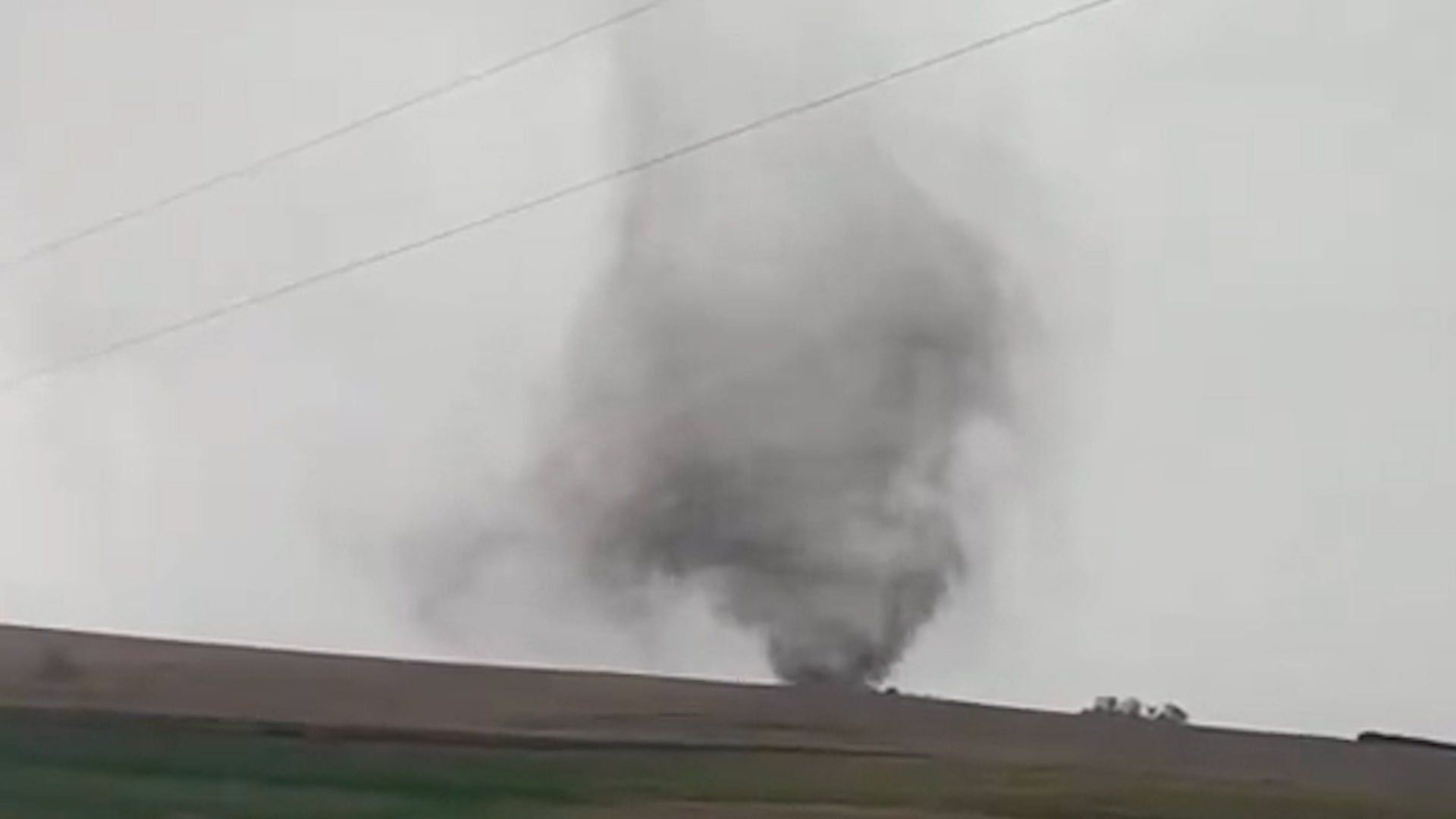
Bump .... the coolest rope I've ever seen. Interesting how it became perfectly vertical at lower elevation.

Nice work!

Quoting tornadodude:
howdy everyone,

I figured since the Atlantic is quiet, and we had some severe weather yesterday, I would share my tornado video from last Friday in Kansas


Member Since: 27 août 2009 Posts: 0 Comments: 290
1383. KoritheMan 06:05 GMT le 03 juin 2012    
Quoting AtHomeInTX:


1914?


Nope. Good try, though. :)
Member Since: 7 Mars 2007 Posts: 409 Comments: 15445
1384. KoritheMan 06:05 GMT le 03 juin 2012    
.
Member Since: 7 Mars 2007 Posts: 409 Comments: 15445
1385. KoritheMan 06:15 GMT le 03 juin 2012    
Since no one is up, the answer is 1990. Marco weakened to a tropical depression just prior to striking the Florida coast.
Member Since: 7 Mars 2007 Posts: 409 Comments: 15445
1386. allancalderini 06:16 GMT le 03 juin 2012    
in which year was a name storm not include in the best tracks data base?
Member Since: 15 octobre 2011 Posts: 0 Comments: 2024
1387. BahaHurican 06:16 GMT le 03 juin 2012    
Quoting windshear1993:
and your point of this?? and if its about the waves on afica they will all die becuase of sal and windshear
It's called Watching The Tropics.... we do it a lot on here between June and November...

Member Since: 25 octobre 2005 Posts: 19 Comments: 17663
1388. BahaHurican 06:19 GMT le 03 juin 2012    
Quoting alexhurricane1991:
Agreed its good to post these maps just an appetizer for when we really need to watch the coast of africa even though i think we will have an pretty limited cape verde season with not that many storms developing in this region i bilieve we will have homegrown systems this year and more landfalls but thats my opinion.
Never forget... even the "homegrown" storms during most of the season generally form from Twaves that have crossed the ATL...
Member Since: 25 octobre 2005 Posts: 19 Comments: 17663
1389. AtHomeInTX 06:22 GMT le 03 juin 2012    
Quoting KoritheMan:
Since no one is up, the answer is 1990. Marco weakened to a tropical depression just prior to striking the Florida coast.


Ah well, as long as I was close. lol
Member Since: 24 août 2010 Posts: 0 Comments: 3886
1390. BahaHurican 06:23 GMT le 03 juin 2012    
Quoting alexhurricane1991:
Actually its tropical storm marco not tracy that was the smallest on record
You know it is just too late when you can remember 1/2 dozen imagery shots of the system in question, but not the name... lol
Member Since: 25 octobre 2005 Posts: 19 Comments: 17663
1391. KoritheMan 06:30 GMT le 03 juin 2012    
Quoting allancalderini:
in which year was a name storm not include in the best tracks data base?


You're probably referencing HURDAT's ongoing research project, which I haven't really looked into much. Consider me stumped.

ETA: Wait, no. I think you're talking about Mike in 1950, which was operationally considered a tropical cyclone.
Member Since: 7 Mars 2007 Posts: 409 Comments: 15445
1392. ncforecaster 06:41 GMT le 03 juin 2012    
The Question:

What is the only year in which the mainland United States did not see a tropical storm landfall?

The Answer:

There are two hurricane (H) seasons in HURDAT that don't currently show/list a tropical storm (TS) strike on the U.S. coastline. They are the 1862 and 1864 H seasons. Although TS Marco didn't make a direct landfall at TS intensity in 1990, it did however bring high-end TS wind speeds to a portion of SW Fl.
Member Since: 17 mai 2006 Posts: 104 Comments: 1301
1393. KoritheMan 06:45 GMT le 03 juin 2012    
Quoting ncforecaster:
The Question:

What is the only year in which the mainland United States did not see a tropical storm landfall?

The Answer:

There are two hurricane (H) seasons in HURDAT that don't currently show/list a tropical storm (TS) strike on the U.S. coastline. They are the 1862 and 1864 H seasons. Although TS Marco didn't make a direct landfall at TS intensity in 1990, it did however bring high-end TS wind speeds to a portion of SW Fl.


Marco wasn't considered a [tropical storm] landfall though, which is the question I asked. Didn't know about the other two. *goes to research*
Member Since: 7 Mars 2007 Posts: 409 Comments: 15445
1394. gator23 07:11 GMT le 03 juin 2012    
Test
Member Since: 26 août 2008 Posts: 0 Comments: 1994
1395. AtHomeInTX 07:11 GMT le 03 juin 2012    
This run of the EURO is completely different from the last few days and whatever that thing sitting on TX/LA at the end of the run comes from the north, never gets off shore, but bounces around TX for days. strange

Member Since: 24 août 2010 Posts: 0 Comments: 3886
1396. hydrus 07:30 GMT le 03 juin 2012    
This looks nasty..
Member Since: 27 septembre 2007 Posts: 1 Comments: 14303
1397. hydrus 07:31 GMT le 03 juin 2012    
Quoting gator23:
Test
Test complete..:)
Member Since: 27 septembre 2007 Posts: 1 Comments: 14303
1398. HadesGodWyvern 07:39 GMT le 03 juin 2012    
Japan Meteorological Agency
Tropical Cyclone Advisory #25
SEVERE TROPICAL STORM MAWAR (T1203)
15:00 PM JST June 3 2012
=================================

SUBJECT: Category Two Typhoon In Sea East Of The Philippines

At 6:00 AM UTC, Severe Tropical Storm Mawar (980 hPa) located at 19.3N 125.4E has 10 minute sustained winds of 55 knots with gusts of 80 knots. The cyclone is reported as moving north northeast at 8 knots.

Dvorak Intensity: T3.5

Storm Force Winds
=================
60 NM from the center

Gale Force Winds
================
210 NM from the center in southeastern quadrant
150 NM from the center in northwestern quadrant

Forecast and Intensity
=========================

24 HRS: 22.0N 126.6E - 75 knots (CAT 3/Strong Typhoon) South of Okinawa
48 HRS: 26.0N 130.1E - 70 knots (CAT 3/Strong Typhoon) Minami daito waters
72 HRS: 29.4N 136.0E - 55 knots (CAT 2/Severe Tropical Storm) South of Japan
Member Since: 24 mai 2006 Posts: 43 Comments: 36686
1399. PolishHurrMaster 08:36 GMT le 03 juin 2012    
My question:
If - in some way - tropical storms and hurricanes in last 5 years would move 5 degress further west,which hurricane would be most damaging and where it would hit?
Member Since: 19 mai 2010 Posts: 0 Comments: 344
1400. LargoFl 09:59 GMT le 03 juin 2012    
.............................Good Morning folks!!, another hot and sunny day here in Florida,but something looks to be happening in north florida come tuesday,well thats days away..enjoy today..have a great one folks
Member Since: 6 août 2011 Posts: 0 Comments: 22426
1401. RTLSNK (Mod) 10:25 GMT le 03 juin 2012    
Member Since: 3 septembre 2008 Posts: 0 Comments: 15202

Viewing: 1351 - 1401

Page: 1 | 2 | 3 | 4 | 5 | 6 | 7 | 8 | 9 | 10 | 11 | 12 | 13 | 14 | 15 | 16 | 17 | 18 | 19 | 20 | 21 | 22 | 23 | 24 | 25 | 26 | 27 | 28 | 29 | 30 | 31 | 32 | 33 | 34 | 35 | 36 | 37 | 38Blog Index

New Comment
Community Standards Policy Comments will take a few seconds to appear.
Post Your Comments
Please sign in to post comments.
Not only will you be able to leave comments on this blog, but you'll also have the ability to upload and share your photos in our Wunder Photos section.
About JeffMasters
Jeff co-founded the Weather Underground in 1995 while working on his Ph.D. He flew with the NOAA Hurricane Hunters from 1986-1990.

Local Weather
Overcast
55 ° F
Couvert
Community Activity