Drought, Fire, Flood: In the News
I have been writing about a variety of issues that I know are of interest to only a small number of people – U.S. science organizations, climate model software, and validation of climate models. I am going to move away from that arcane set of subjects for a while and spend a little more time in the climate mainstream. In this entry I want to touch on several subjects – starting with my garden.
My garden is in the flat land that is the western edge of the Great Plains, just east of Boulder, Colorado. Weather wise, it is a complex and difficult environment: more than 5000 feet above sea level, reliant upon water from the winter snow pack in the mountains, huge swings of hot and cold. In terms of climate types, I have seen region defined as both arid and semiarid. In the last week, we have had three or more inches of rain – hard driving rain with much lightning. There is water standing between the rows in the garden. The week of July 4 it was so dry there was a fire ban, and many firework fires.
Last summer in Boulder we had the Fourmile Fire, which burned thousands of acres and dozens of houses. With this rain, we have mudslides, rock slides and flash floods (Longmont Times Call). It all makes you appreciate the importance of the weather and the climate. Wet and dry. Hot and cold. ( 485 Billion Dollar Impact of Weather)
Boulder is a microcosm of what is going on in the U.S. There have been overwhelming fires in Arizona, New Mexico, and Texas. (Texas Fires). Dangerous drought and heat is spreading all across the southern half of the U.S. The dust storm last week in Arizona was reminiscent of pictures of the Dust Bowl. (more here). We were overwhelmed not long ago by the Mississippi River flooding. I have almost forgotten about the Missouri River flooding.

Figure 1: From KFAB Omaha News Radio. Photo Credit AP: Missouri River flood of Calhoun Nuclear Power Plant.
We see here the persistence of weather, climate, snow cover, drought, floods - one extreme after another. Jeff Master’s wrote an excellent summary of 2010-2011 as being a year of the most extreme events since 1816 – the year of Mount Tambora, a definitive and understood climate anomaly. Jeff writes that June 2011 continues the run. July 2011 is looking strong. It has been more than 300 months since there was a “below average” mean temperature. That’s a little compelling.
We are being handed one case study after another, where we see the impact that weather and climate have on us. And what is that impact? We see vulnerable people losing their homes, their crops. But where is the real threat? What does it mean that 213 counties in Texas are primary disaster areas?
Energy, economy, population – markets. We all know that the weather affects our economy. We rely on a stable climate. We see here and now an interconnected world, where extreme heat kills thousands and destroys crops and send food prices soaring. We see multiple billion dollar liens placed on our economy by floods, droughts, and tornadoes. These costs come at a time when economies all around the world are weak. There is a debt crisis, and the weather is demanding more loans. Right here and now the world is providing one climate disaster after another. The weather and climate are showing the need for more planning, for building resilience and recovery strategies. The weather and climate are revealing our vulnerabilities. While there is the obvious, the family fleeing the flood, the destroyed Joplin, Missouri hospital, there is also the accumulated impact felt through markets, higher food prices, emergency relief, things that will not be fixed, people relocating.
We are being offered lessons. I have written this far and not strung together the words “climate change” or mentioned “global warming.” This is the weather in our warming climate. The take away message from climate models, Be Prepared.
r
Rood on To the Point
Open Climate Modeling:
Greening of the Desert
Stickiness and Climate Models
Open Source Communities, What are the Problems?
A Culture of Checking
Organizing U.S. Climate Modeling:
Something New in the Past Decade?
The Scientific Organization
A Science-Organized Community
Validation and the Scientific Organization
Reader Comments
Page: 1 | 2 | 3 | 4 | 5 | 6 | 7 | 8 | 9 | 10 | 11 | 12 — Blog Index
MAY
Global Highlights
The combined global land and ocean average surface temperature for May 2011 was 0.50°C (0.90°F) above the 20th century average of 14.8°C (58.6°F). This is the 10th warmest such value since records began in 1880.
For March–May 2011, the combined global land and ocean surface temperature was 0.53°C (0.95°F) above average—also the 10th warmest March–May on record.
The combined global land and ocean average surface temperature for January–May 2011 was the 12th warmest on record. The year-to-date period was 0.48°C (0.86°F) warmer than the 20th century average.
The global land average surface temperature for May 2011 was the seventh warmest May on record, while March–May ranked as the 10th warmest such period.
In the Northern Hemisphere, both the May 2011 and March–May average temperatures for land areas were seventh warmest such periods on record.
The May, March–May, and year-to-date (January–May) worldwide ocean surface temperatures all ranked as the 11th warmest such periods on record.
La Niña ended during May 2011. Sea surface temperature anomalies in the eastern equatorial Pacific Ocean warmed above the La Niña threshold, signifying a return to ENSO-neutral conditions.
Please Note: The data presented in this report are preliminary. Ranks and anomalies may change as more complete data are received and processed. Effective with the July 2009 State of the Climate Report, NCDC transitioned to the new version (version 3b) of the extended reconstructed sea surface temperature (ERSST) dataset. ERSST.v3b is an improved extended SST reconstruction over version 2. For more information about the differences between ERSST.v3b and ERSST.v2 and to access the most current data, please visit NCDC's Global Surface Temperature Anomalies page.
Introduction
Temperature anomalies for May 2011 and March–May 2011 are shown on the dot maps below. The dot maps on the left provide a spatial representation of anomalies calculated from the Global Historical Climatology Network (GHCN) dataset of land surface stations using a 1961–90 base period. The dot maps on the right are a product of a merged land surface and sea surface temperature (SST) anomaly analysis developed by Smith et al. (2008). For the merged land surface and SST analysis, temperature anomalies with respect to the 1971–2000 average for land and ocean are analyzed separately and then merged to form the global analysis. For more information, please visit NCDC's Global Surface Temperature Anomalies page.
MayTemperatures during May 2011 were warmer than average for much of the world's land surface, with the warmest temperature anomalies occurring over northwestern Africa, most of Europe and Russia, southwestern Asia, Alaska, and northwestern Canada. Cooler-than-average regions included the western half of the United States, most of Mexico, much of central and eastern Canada, eastern Russia, and Australia. The worldwide land temperatures for May 2011 ranked as the seventh warmest May on record, 0.73°C (1.31°F) above the 20th century average of 11.1°C (52.0°F). The global temperature dataset period of record dates back to 1880.
The worldwide ocean temperatures during May 2011 were 0.41°C (0.74°F) above the 20th century average, and ranked as the 11th warmest May on record. The warmest sea surface temperatures (SSTs) were present in most of the central and western Pacific Ocean, most of the Atlantic, and much of the southern midlatitude oceans. La Niña, which had been present since July 2010, ended during May as ENSO-neutral conditions returned. According to NOAA's Climate Prediction Center, neither El Niño nor La Niña conditions are expected through summer 2011. The global combined land and ocean surface temperature for May tied with 2000 and 2008 as the 10th warmest on record, at 0.50°C (0.90°F) above the 20th century average of 14.8°C (58.6°F).
The May 2011 average temperature for the Northern Hemisphere (land and ocean surface combined) was 0.58°C (1.04°F) above the 20th century average and was the ninth warmest May on record for the hemisphere. The Northern Hemisphere land surface temperature was seventh warmest, at 0.91°C (1.64°F) above the 20th century average. The ocean surface temperature ranked as the 13th warmest May, at 0.37°C (0.67°F) above the 20th century average.
In southwestern Europe, Spain experienced its third warmest May on record, behind 1964 and 2006, at 2.9°C (5.2°F) above the 1971–2000 average.
The average temperature for the Southern Hemisphere as a whole (land and ocean surface combined) was 0.43°C (0.77°F) above the 20th century average, and tied with 2004 as the 12th warmest May on record. The Southern Hemisphere ocean temperature during May 2011 was the 10th warmest May on record, with an anomaly of 0.46°C (0.83°F) above the 20th century average. The May 2011 Southern Hemisphere land temperatures were 0.24°C (0.43°F) above the 20th century average—the 37th warmest May on record.
Maximum May temperatures across Australia were 1.33°C (2.39°F) below the 1961–90 average, the seventh coolest on record and the coolest since 2000. Maximum temperatures in Queensland were also seventh coolest, while the Northern Territory and South Australia ranked as fifth coolest. Minimum temperature anomalies across Australia were even larger, 1.75°C (3.15°F) below average, the third coolest on record. Queensland and the Northern Territory reported their second lowest May minimum temperatures on record.
In contrast, according to the National Institute of Water and Atmospheric Research (NIWA), New Zealand reported its warmest May since records began in 1909, with the temperature 2.2°C (4.0°F) above the monthly average.
Link
:)
CB, regional, Right.
The whole of the SH was cold, regional, say you?
Sure if they post regional stuff why can't I?
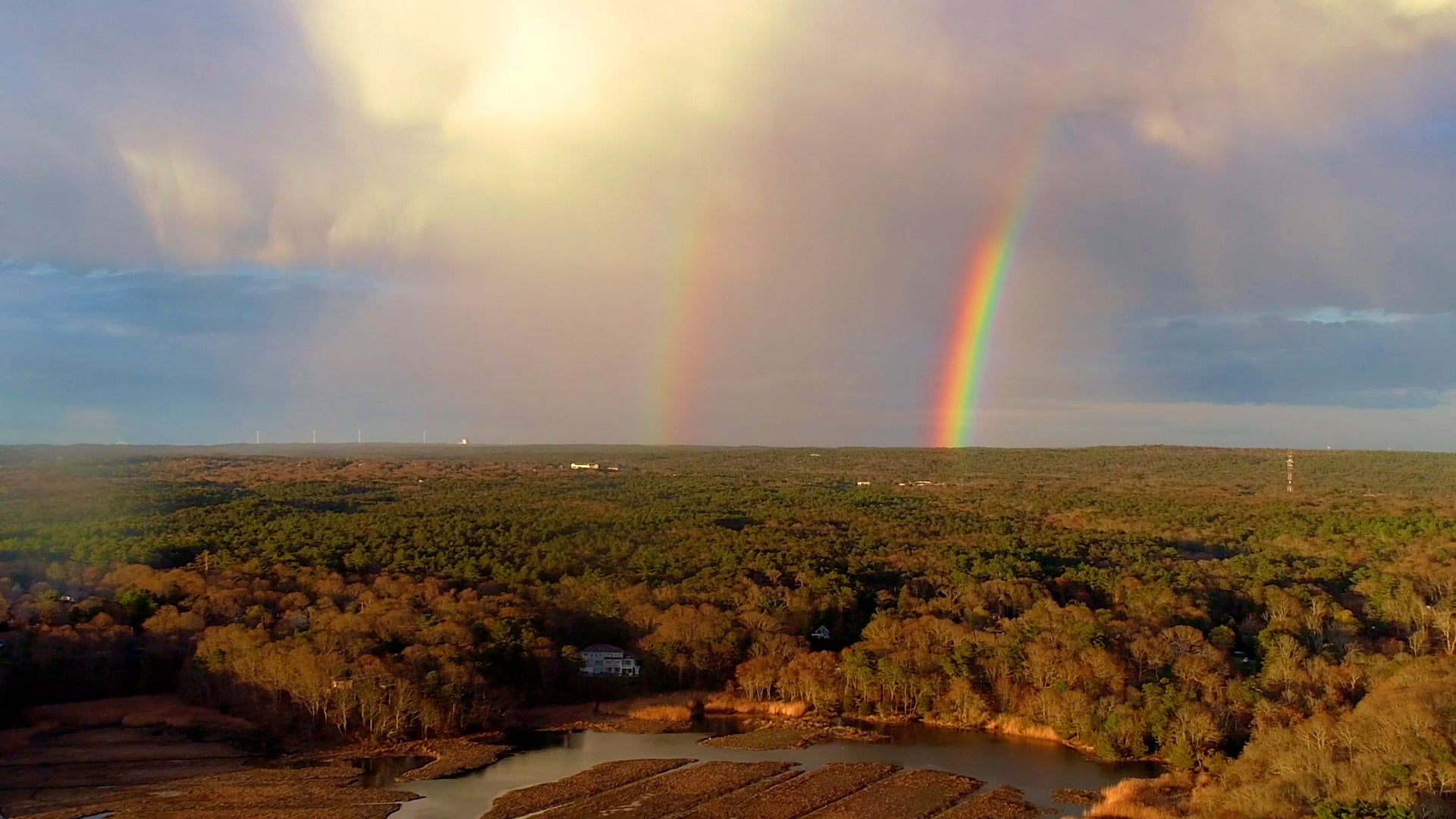
Nice Breezy Day, Clear Sailing, Spotty Gentle Sunshowers and Rainbows: Not In the News
How did June 2011 Stack Up Globally?
June 2011 ranked in the top five for warmest on record globally in the satellite record.
According to Remote Sensing Systems or RSS, June 2011 was the fifth warmest June in the satellite record, which goes back to 1979.
June 2011 ended up averaging .277 degrees celsius above normal for the lower troposphere, according to RSS.
Image courtesy of RSS.The continental USA had a warm month compared to normal, averaging .536 celsius above normal. May 2011 averaged .412 celsius below normal.
The hot conditions clearly persisted across the south-central USA during June as the extreme drought further added to the heat. With such a lack of moisture in the ground across that region the sun's energy goes mostly toward heating the ground, rather than evaporation, which is a cooling process.
The longer term trend for the lower troposphere globally is .143 c per decade. See below.
Link
NOAA DATA OUT SOON.
MSNBC Article...
But hang onto your seats, folks; we ain't seen nothing yet...
Cometh al this new corne fro yere to yere;
And out of old bookes, in good faithe,
Cometh al this new science that men (lere).
from Middle English leren (“to teach, instruct”), from Old English lǣran (“to teach, instruct, indoctrinate”), from Proto-Germanic *laizijanan (“to teach”), from *laizō (“lore, teaching", literally, "track, trace”), from Proto-Indo-European *leyəs- (“to track, furrow”). Cognate with Dutch leren, German lehren. See also lear, lore, learn.
Geoffrey Chaucer
c. 1343 – 25 October 1400
Correct again.
those poor radiation baked space instruments
i sure hope we'll be able to trust them going forward
when the chinese bid high to service them properly
as we scrap our space industry for DMV-style hospitals
"It can only be explained by global warming," he added.
the Earth is treating her flora with kindness lately
but not everywhere
at any point in time in Earth's history, there is a drought in one place and a heavy saturation event in another.
the mosaic of nature screams with a pattern of cyclicality
Night sky offers treats and challenges at the South PoleBy Grace Clark and Dana Hrubes, South Pole correspondents
Posted June 24, 2011 May is the month when “Polies” are settled into their work routine, which includes dealing with constant darkness.
We experienced a record in South Pole weather last month, with May 2011 being the coldest May since the Navy began keeping records in 1957. The average temperature was -62.6C/-80.7F. The previous record was from 1989.
Must be regional, really?
Link
And yet more extremes. Pretty amazing, init?
Yes! Go away for the next few thousand years unless man intervenes.
Global Climate Change Indicators
National Oceanic and Atmospheric Administration
National Climatic Data Center
Many lines of scientific evidence show the Earth's climate is changing. This page presents the latest information from several independent measures of observed climate change that illustrate an overwhelmingly compelling story of a planet that is undergoing global warming. It is worth noting that increasing global temperature is only one element of observed global climate change. Precipitation patterns are also changing; storms and other extremes are changing as well.
How do we know the Earth's climate is warming?
Thousands of land and ocean temperature measurements are recorded each day around the globe. This includes measurements from climate reference stations, weather stations, ships, buoys and autonomous gliders in the oceans. These surface measurements are also supplemented with satellite measurements. These measurements are processed, examined for random and systematic errors, and then finally combined to produce a time series of global average temperature change. A number of agencies around the world have produced datasets of global-scale changes in surface temperature using different techniques to process the data and remove measurement errors that could lead to false interpretations of temperature trends. The warming trend that is apparent in all of the independent methods of calculating global temperature change is also confirmed by other independent observations, such as the melting of mountain glaciers on every continent, reductions in the extent of snow cover, earlier blooming of plants in spring, a shorter ice season on lakes and rivers, ocean heat content, reduced arctic sea ice, and rising sea levels.
Link
Same Link
The Global Surface Temperature is Rising
Global average temperature is one of the most-cited indicators of global climate change, and shows an increase of approximately 1.4F since the early 20th Century. The global surface temperature is based on air temperature data over land and sea-surface temperatures observed from ships, buoys and satellites. There is a clear long-term global warming trend, while each individual year does not always show a temperature increase relative to the previous year, and some years show greater changes than others. These year-to-year fluctuations in temperature are due to natural processes, such as the effects of El Ninos, La Ninas, and the eruption of large volcanoes. Notably, the 20 warmest years have all occurred since 1981, and the 10 warmest have all occurred in the past 12 years.
Global annual average temperature measured over land and oceans. Red bars indicate temperatures above and blue bars indicate temperatures below the 1901-2000 average temperature. The black line shows atmospheric carbon dioxide concentration in parts per million.
Link
You sound like the Hadley Center cherry picking data on a chart that clearly shows warming over a longer time period. Sorry if you don't see it that way!
Why did you exclude it then?
The other data.
Data prior to 1999.
how about all that data prior to satellites and computers?
how about that data before the combustion engine?
how about that data from the bronze age?
Could Just One Degree Change the World?
2 Degress Warmer: Ocean Life in Danger
3 Degrees Warmer: Heat Wave Fatalities
4 Degrees Warmer: Great Cities Wash Away
5 Degrees Warmer: Civilization Collapses
6 Degrees Warmer: Mass Extinction?
followed by Mega Disasters and other Doom Docs
love that stuff
No matter what the debate, let us be deligent in our own research and not blindly follow "anyone".
Let us not depend on graphs and factoids for our only source of knowledge.
Let us look at our coral reefs worldwide.
The only thing we have heard from "the powers that be" is that coral reefs wordwide are being destroyed by ocean acidification.
Is ocean acidification responsible for destroying my beloved reefs?
Maybe not???
http://soundwaves.usgs.gov/2011/04/research.html
Could ther still be other causes???
http://floridakeys.noaa.gov/sanctuary_resources/m orecoral.html
****But wait a minute...How can newly planted coral florish in an ever increasing acid enviroment???****
That's worth repeating..."HOW CAN NEWLY PLANTED CORAL FLORISH IN AN EVER INCREASING ACID ENVIROMENT"?
http://www.floridakeysdivectr.com/florida-keys-co ral-reef-restoration.html
The takeaway from this is that we don't hear "the rest of the story".
Regional threats include new diseases that sweep through populations of organisms livingon the reefs. For example, in 1983, an unknown disease,possibly a virus, is believed to have come through the Panama Canal from the Pacific Ocean. This disease killed most of the spiny sea urchin population, first in Panama then throughout the Caribbean and to the Western Atlantic reefs of the Florida Keys and Bahamas.More than 99% of the spiny sea urchins were killed. The virus seems to still be present,because spiny sea urchins are now uncommon on Caribbean reefs.
The consequence of the die-off of the spiny sea urchin has been unlimited growth of algae on coral reefs. The spiny sea urchin population fed on the
algae populations found on the coral reefs. For example, in the early 1980’s, coral covered more than 60% of the reefs in Jamaica. Now, coral covers less than 10% of the reef. Algae are taking over the reefs
everywhere.
Couple that with the fact that I have fished the Florida Keys for years. The water thermometer on my boat is calibrated and true. It is not uncommon for me to troll the bouy line off the Keys and note the temperature of the water. Flipping open my laptop and comparing my reading to the official NOAA reported reading of that particular bouy, I see NOAA's report a couple of degrees warmer. Why would that happen?
What I am saying, is things are not always as they appear or as some official or Empirical Data streams would have us infer.
It would serve many of us well to get out of our chairs and go see for ourselves.
A profoundry of pessimistic despair does not always describe knowledge.
Regards,
sheph
They have that too.
Check out Coral Bleaching.
Link
Correct. Shame on them.
Root cause analysis proves it is GHGs causing the current problems with coral reefs mostly all over the world.
I am sure they can run Automatic calibrations on those buoy temperature instruments all the time.What say you?
Great entertainment for certain.
It is interesting to ponder that the Earth has been much warmer in the past than now,,,, so life must have made quite a come back it seems. Then again, the prognostication associated with the show is based upon our limited ability to assess, through modeling, the impact of temperature change on not just climate, but vast ecosystems that history tells us has adapted well over time. History also tells us that cold is the proven threat to life with respect to mass extinction.
Cold weather mass extinction for other species except for man.
But the trend on all the graphs is upward for the longer period of time isn't it? You can cherrypick the data all you want but the fact is the trend is upwards.
No you cherry picked 9 years from 1999 to 2008.
Yes, the earth has been warmer in the past. But as so many scientists have stated--and as video #1 reiterates--it's not the fact that the climate is changing, but how abnormally fast it's doing so. In all of geologic record, the climate has never changed so fast without mass disruptions to the biosphere.
Viewing: 51 - 101
Page: 1 | 2 | 3 | 4 | 5 | 6 | 7 | 8 | 9 | 10 | 11 | 12 — Blog Index